Disaster Relief in UI seeking new leadership in 2026


By UI Connections
Southern Baptist Disaster Relief volunteers are the first on the scene and the last to leave.
“When you’ve seen a disaster on the news in the last 50 years, Southern Baptist Disaster Relief (SBDR) volunteers were already on the scene – and they remained long after news cameras left town,” according to SendRelief.org website. “As the third-largest disaster response group in the nation, this network of state-based volunteer teams do more than just clean up; they bring the healing of Christ to those whose lives have been shattered.”
That’s why Don Dana of Canyons Church in Salt Lake City says he got involved more than 20 years ago.
“I saw the opportunity to be part of something we could do,” Dana told UI Connections. “I think Jesus was working on me, telling me to go. He gave me the opportunity to help people, people that were hurting.”
His first call-out was after a hurricane in Alabama in 2004. Two years later he helped survivors from Hurricane Katrina who’d been relocated to Camp Williams, south of Bluffdale, Utah.
Dana, like most Utah-Idaho trained DR volunteers, has aged to the point he is unable to respond to activation requests, he said.
“The hardest thing is not being able to go on activations,” Dana said. “It’s so fulfilling, so rewarding, to help people, to do God’s work.”
Southern Baptist Disaster Relief is about extending “help, hope and healing” – to use their catchall phrase – to people whose lives have been upended because of an earthquake, tornado, hurricane, flooding, wildfire and volcanic eruptions, to list several natural disasters.
Trained DR volunteers serve in seven major areas:
– Mass feeding
– Chain saw
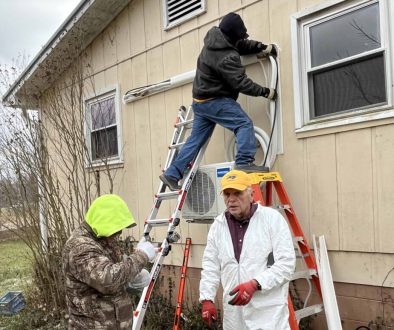
– Mud-out
– Shower/laundry
– Childcare
– Chaplaincy
– Security
Each area includes a variety of roles. At the bottom of their national website – sendrelief.org – there are five short videos on the mass feeding ministries that show the diversity of volunteers needed. Other ministry areas require similar expertise or simply a willingness to serve. Handymen, for example, are needed to keep the equipment in good repair and to quickly restore a piece of malfunctioning equipment to good working order. Organized and administrative volunteers are essential. Others serve by preparing meals, washing pots and pans, or ministering directly to hurting people.
Training – both in-person and online – is required at every level to maintain maximum safety and cohesion of what has, over the last 50-plus years, become almost military in its efficiency and chain of command.
Utah and Idaho DR volunteers are in Region 1, which basically includes states from the Rocky Mountains to the Pacific Ocean.
But “Utah is very slim in volunteers,” Dana said, though “there is a remnant in St. George,” adding that he didn’t know of any training planned for either state.
“We need some younger folks,” Dana said. Many of the volunteers are of retirement age, and few younger people are stepping in to replace those who can no longer respond to activations.
Russel Hohmann is to retire in 2026 as Director of Utah-Idaho Disaster Relief. He started serving on DR teams in 2004, along with Dana in Alabama, but in 2007, the ministry heightened his interest.
The Crandall Mine disaster near Helper, Utah, occurred August 6, 2007, and a Disaster Relief team, including Hohmann, deployed to provide comfort for emergency responders and meals for those seeking to rescue the six trapped miners.
Several rescue workers were killed during the response, and that loss impressed on Hohmann and others the importance of their work. He became determined to continue this important work.
Earlier this year, Hohmann went to Live Oak, Florida, to serve as part of the assessment team after Hurricane Helene, he wrote in his report to the UISBC this October.
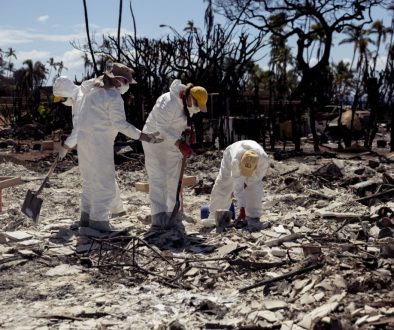
Hohmann also reported that a feeding team assisted in February after the greater Los Angeles fires. The following month, from March 23-30, “We had 18 trained volunteers which included feeding, personal property recovery and chaplains respond to the California LA fires.” “One salvation and many contacts and conversations happened, sharing the love of Christ,” he wrote.
In a recent interview, Hohmann said “When you serve, you expect to bless people, but you end up getting blessed as much, or more, than they do”. Even though he is stepping down from the director role in early 2026, he has no plans to leave Disaster Relief ministry. He intends to continue serving on future activations and call-outs.
To become a Disaster Relief volunteer, learn when and where training opportunities are set or to make a year-end donation to the ministry, please visit our website.