by Aaron Marshall, Director of Ratio Christi Ministry at Utah Valley University
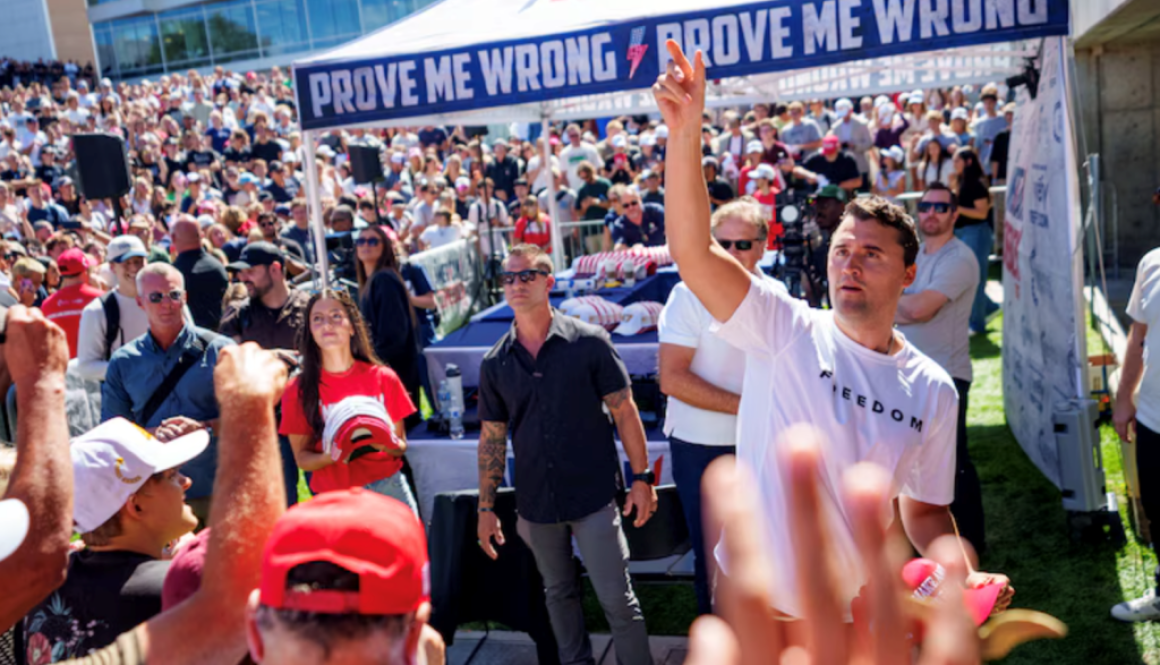
At the beginning of TP USA’s event at UVU, Charlie Kirk was interacting with the crowd.
“When people stop talking, bad stuff happens. When marriages stop talking, divorce happens. When civilizations stop talking, civil war ensues. When you stop having a human connection, with someone you disagree with, it becomes a lot easier to want to commit violence against that group. What we as a culture have to get back to, is being able to have a reasonable disagreement where violence is not an option.” – Charlie Kirk
The following article was Aaron Marshall’s first person reflection on the events of September 10 where Turning Point USA’s Founder and President, Charlie Kirk, was assassinated on the campus of Utah Valley University in Orem, UT.
Aaron Marshall (right) and his children attending Charlie Kirk event at UVU.
Orem, UT – On September 10, I was at the Charlie Kirk event at Utah Valley University (UVU) with my wife, my oldest daughter Adalyn (a freshman at UVU), my youngest daughter Isabelle (12), two of our Ratio Christi staff and some other friends. I’ll be honest, I had never watched a whole lot of Charlie Kirk’s videos before that day. My wife is a big fan and was super excited to come to the event. My daughter got there early and saved us all a place about twenty yards from where Charlie’s tent was set up. There was an incredible energy in the crowd. It was overwhelmingly pro-Charlie, although there were a few protesters that were set up on a roof top walkway near the stage. When Charlie came out the crowd went wild as he passed out hats and posed for pictures. He challenged the protesters to come down and debate him with a wave of his fingers.
As he sat down to begin, the first question was from an LDS student we have had some interaction with at our table previously. For the past three years as we have tried to get the Ratio Christi chapter at UVU off the ground, we have done tabling evangelism almost daily. Much like Charlie, our goal is to foster conversation across religious and political divides. We are known around campus as the “whiteboard guys.” The county that UVU is in is overwhelmingly LDS (The Church of Jesus Christ of Latter-day Saints – they do not like to be referred to as Mormons anymore) and so much of our interaction at the table is with LDS students. So, when the first question for Charlie was about Mormon vs Christian theology, I recognized the student and the questions he was offering as we have heard much of the same before. Charlie did a great job (especially for someone that isn’t well versed in Mormon Theology) of outlining some of the major differences between Christianity and Mormonism and pointing out some of the reasons why he doesn’t think that Mormonism is true. He also was able to share the evidence for Jesus’ resurrection and the Biblical gospel with the crowd of thousands. It would be the last thing that Charlie Kirk ever did.
Overlook of the crowd attending event at UVU with Turning Point tent in background.
The next question was about transgenderism and mass shootings and as he began to answer that question, we heard a loud sound from behind us. I was staring at Charlie when the bullet hit his neck. Everyone dove to the ground and started screaming as we became aware of what was happening. After a few seconds, we all realized that there were no more shots and started moving quickly towards the inside of the school building behind us. My daughters were in hysterics. I was trying to keep us all together in the mass of people and keep them calmed down. We moved inside and got temporarily separated. I screamed at everyone to stay together. I knew we needed to get to the other side of campus, so we started heading in that direction. Some people were being ushered into “safe” rooms, but I wanted us to keep moving (we found out later that people in those rooms were stuck there for hours). People were understandably freaking out all around us. I just wanted to get us to a “safe” place. We moved through the campus and out the other side. We were able to get to my wife’s car that was parked off campus and drive home safely. My car was left on campus and I wasn’t allowed to pick it up until the next morning.
The next week was really rough for all of us and for our community. At first, it was the nervousness that the killer had not been caught. Then it was just coming to grips with what we saw and experienced. The girls would jump every time they heard a loud noise. I went down the dark rabbit hole of “X” and reddit to find out as much information as I could about the shooter and what happened (I later found out this is one of the six stages of grief). My conclusion was that those are two of the most vile places on the internet. I cannot imagine how young people are able to constantly be on those sites, and those like them, and not be permanently traumatized.
One week later, the site of the UVU event looked very different, an American flag and pavers take up the space where Charlie Kirk was assassinated.
UVU was closed the next week and reopened for classes the following Wednesday (one week after the shooting). It was a weird feeling returning to the campus. There were tons of police there that day. There were news crews and “onlookers” all over campus. They had turned the shooting scene into a memorial. We went out that day to pray with students and just be with them. We were able to pray with the student that was asking the question about transgenderism when Charlie was shot. He was super shook up over everything that happened. I saw him last week and he told me how much it meant to him that we were able to pray with him that day. He is not a believer. Only 0.5% of Utah County are believers. If the numbers correlate (and I think it’s probably worse) that means that less than 300 students at UVU are believers. That means over 44,000 students are trying to process what happened at their university on September 10 without Jesus. Can you imagine how hard that would be?
Greg Laurie and Harvest ministries will be hosting a Hope For America Crusade on UVU Campus November 16
In the few weeks since the terrible event at UVU we have seen an incredible openness to spiritual conversations on campus and in the Salt Lake Valley. The pernicious problem with that in this area is that so many people think that Biblical Christianity and The Church of Jesus Christ of Latter-day Saints is one in the same. Our evangelistic conversations so often are a mix of proclaiming the true gospel while at the same time trying to separate this from the LDS message these students have heard their whole lives. To say that this is hard soil is an understatement. But we keep going – because the gospel is worth it.
Charlie Kirk died immediately after sharing the true Biblical gospel of eternal life by grace through faith alone. In the weeks since the event, I have been contemplating our ministry in light of that. This has been one of the hardest seasons in ministry since we joined Ratio Christi back in the early days (my Supported Missionary number is 1 – 430001 to be exact!). Doing ministry in Utah is hard. Doing ministry in Utah County, Utah is even harder. It feels like there have been all kinds of spiritual attacks on us and this community in this season. It even got to the point where I was contemplating if we should leave. But the events of September 10 have helped me to begin to change my mind (there are still days I want to leave). I think about Romans 10:14 – “How then will they call on him whom they have not believed? And how are they to believe in him whom they have never heard? And how are they to hear without someone preaching.”
How will the LDS ever learn of the true Jesus? How will those that have rejected Mormonism (the stats say that upwards of 80% of those that walk away from Mormonism will go atheist or agnostic) ever learn about the true Jesus that loves them because he loves them and not because they are keeping the rules? How will people find true freedom outside of man-made religion?
Aaron Marshall praying over Utah Governor, Spencer Cox, as he visited the campus.
Only if someone is here to tell them. And I think a ministry like Ratio Christi is uniquely able to not just share the truth of the Biblical gospel with those that are lost but then also help them understand the reasons and evidence behind why the gospel is true. Ratio Christi is a ministry that encourages students to ask hard questions and seek those answers. It encourages students to go where the evidence leads, not just where someone in authority tells them to go. And a ministry like Ratio Christi is so needed in a place like this. God is working at UVU even though it doesn’t feel like it all the time. God is using us and has been using us. And maybe we are here on this campus for such a time as this.
On the Wednesday that students came back, we also got a chance to pray for the Governor of Utah – Spencer Cox. After we prayed over him, he addressed the students that had gathered around us while we prayed. He said that this would either be the end of something terrible and the beginning of something better or it was the beginning of something far worse. My prayer is that September 10, 2025 will not be remembered solely as the day that Charlie Kirk was assassinated at UVU but will be remembered as the beginning of something much better. The beginning of true Revival at UVU and in Utah County and in Utah.
Aaron Marshall has served for several years ministering on the campus of Utah Valley University. A portion of your State Missions Offering supports his work, but there is so much more that can be done to help him remain on the field where his needed now more than ever. If you would like more information about how you can be a part of his Support Team through prayer or financial gifts, visit his support page at https://give.ratiochristi.org/missionary/aaron-marshall
The new parsonage at Pleasant View Baptist Church in White Bird, Idaho
By Karen L. Willoughby
WHITE BIRD, Idaho – Pleasant View Baptist Church embraces change. Not just in its leadership, but in the very home that will welcome its next pastor.
After the previous pastor departed in February, church leaders took a hard look at the aging parsonage: a 1969 mobile home donated back in the 1980s. With weakening floorboards, inefficient heating, and a laundry list of maintenance woes, it was clear the time had come for an upgrade.
“We were fortunate to have donors from our congregation eager to help,” Deacon Russell Gray told UI Connections.
Seizing the opportunity, the church opted for a modern manufactured home placed on a solid foundation. The old trailer was demolished and hauled away, a new foundation poured, and two container-length sections of the house were delivered by truck to the property next to the church building.
Sourced from River Bend Homes in nearby Lewiston, Idaho, this three-bedroom, two-bathroom home boasts an open floor plan, energy-efficient appliances – stove, refrigerator, and dishwasher – and a sleek contemporary design.
“The interior still needs finishing touches from the manufacturer,” Gray said. “Water and sewer are hooked up, and electricity should be ready in a week or two. Once that’s sorted, they’ll return to install carpet, make any transport-related repairs, and get everything polished for the new pastor and his wife.”
This investment isn’t just practical. It’s a powerful symbol of the church’s enduring spirit. The new parsonage “not only provides a welcoming residence for the incoming pastor but also symbolizes the church’s commitment to blending tradition with progress, ensuring that Pleasant View Baptist Church remains a vibrant cornerstone of White Bird for generations to come,” according to a recent article in the Idaho County Free Press.
Yet, as with any big transition, there’s a small hitch. The congregation unanimously selected their new pastor, but he’s facing a serious health challenge that requires surgery and recovery time.
“It’s anyone’s guess when they’ll arrive, but with the holidays and his healing process, I’d be thrilled if it’s by early January,” Gray noted thoughtfully. “We don’t want to rush him. His well-being comes first.”
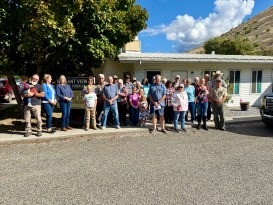
The congregation of Pleasant View Baptist Church in White Bird, Idaho
Despite the delay, the church’s tight-knit community of about 30 regular attendees remains strong and active.
Services kick off every Sunday at 10 a.m., preceded by adult Sunday School at 9 a.m. Midweek, there’s Bible study on Wednesdays at 6 p.m., with deacons stepping up to share preaching and teaching duties.
The women’s group meets every other Monday at 6 p.m., while the men gather for breakfast and devotions on the second Saturday of each month.
Fundraising and outreach are cornerstones here too. A popular spaghetti feed in March supports a full week at Camp Alacca in July for kids, plus another for teens. Vacation Bible School (VBS) this year attracted 20 young participants, thanks in part to ongoing support from Leoma Baptist Church in Leoma, Tennessee, led by Pastor David Simmerman.
“The church loves getting involved in local festivities, from decorating floats for White Bird’s annual 4th of July and Christmas parades to partnering with community groups for monthly barbecues from May to September,” Gray said.
The barbecue gatherings recently moved indoors, year-round, to the IOOF Hall, serving up hearty soups, salads, desserts, and bread. At Easter, Pleasant View Baptist hosts a community sunrise service at the scenic White Bird Overlook, followed by breakfast back at the church and a special service.
In a nod to modern outreach, Pleasant View Baptist has been live-streaming Sunday services on its Facebook page for more than a year, “making it easier for folks near and far to join in,” Gray said.
The parsonage sits on a newly poured foundation next to the church in White Bird, Idaho
And at the heart of it all are the church’s founders, Dick and Susie Brust, who planted the seeds back in 1979.
“They’re still active members, and we just love them to death,” Gray said warmly. “Time and again, they’ve been the ones – along with God’s guidance – who’ve kept this church thriving through the ups and downs.”
As Pleasant View Baptist looks ahead, this blend of renewal, community spirit, and unwavering faith promises to keep it a beacon in White Bird for years to come.
Matt Maestas serves Wyoming Southern Baptist pastors and planters. (Photo courtesy of Facebook)
LARAMIE, WY- Last week I was having a conversation with a group of leaders about burnout and it led to a staggering question: “Why do seemingly good leaders make catastrophically bad moral choices?” As we discussed the warning signs of burnout; exhaustion, disconnection, and subtle withdrawal from relationships. We noticed that a troubling pattern presented itself. The same conditions that lead to burnout often proceed something far more devastating; moral failure.
It seems we can’t go more than 90 days in evangelical life without hearing about another massive moral failure from someone we held in a position of esteem. Aside from a reminder that we need to be careful in placing any person on too high a pedestal, lest we experience greater disappointment at their shortcomings, we don’t often think about what often contributes to the failure itself. While it is easy, and theologically accurate to draw a straight vibrant line between our nature as sinful creatures and moral failure, people rarely make mistakes merely because they are sinful. It is my contention, and has been my experience that men (and I assume this is largely true for women as well) make mistakes because we lack two important things: Margin and Community.
What is margin? Simply put, margin in space; space emotionally, spiritually, physically, relationally to breath, rest, reset and reconnect with ourselves, God, and those most important to us. When we lack margin, we end up tired, stressed out, burned out, and what I describe as “thin” emotionally, spiritually, and intellectually. “Thin” things are permeable, they break easily. This is true for physical and inanimate things, and true for us spiritually as well. When we are “thin” moral failure is far more likely.
While lack of margin is a contributing factor in moral failure, lack of community is equally troubling. Pastors are often the first people in the building on Sunday and the last people to leave. They have more conversations with individuals and families than anyone else, and are the people others most want to visit with. And yet, they are also most likely to have few deep relationships than other congregants. Pastors have the same deep and abiding need for accountable community as anyone, but they are lacking in that area. Many (or should we say most) men lack accountable community in the form of vulnerable male relationships, and regular responsibility to others. As with margin, when we lack this type of community moral failure is far more likely.
As dangerous as lacking either margin or community are individually the combined lack of both can make us easy pickings for an enemy that is often roaming around like a lion seeking whom he may devour.
So what are we to do? As with most things in life, the antidote is ALWAYS action. If you find yourself in a thin place, and lacking community commit to the following:
RECOGNIZE failure is a possibility. All men are capable of all things. If you think you aren’t capable of moral failure, self-harm, destructive leadership you are less likely to guard against such things. Recognize you are capable and take steps to ensure this won’t happen in your life.
REPENT of isolation and pride. I know that we like to see ourselves as these super sufficient, and independent folks, but what often masquerades as self-sufficiently is merely our tendency toward isolation and pride. Repent, ask for God’s help in seeking community with others.
REST regularly. I heard a Pastor say once that Satan never takes a day off so neither does he. Last time I checked Satan wasn’t our role model, and we have a good God who modeled and gave Sabbath to us for our benefit, and to remind us that we aren’t God.
RECALIBRATE your rhythms. Have you organized your life in a way that is conducive to Margin and Community? What may you need to start saying “no” to so that rest and community may flourish?
RECONNECT in your important relationships and community. Spend regular “time” with your spouse and make vulnerable and accountable community an important part of your life.
The work we do is too important a task to allow lack of margin and community to derail our mission, lest we fall and join the ranks of disqualified leaders. Stay the course, guard your heart.
Matt Maestas lives in Laramie Wyoming and serves as the South Region Missionary for the Wyoming Southern Baptist Mission Network. He is a coach and mentor to several pastors and church planters around Wyoming and the west. He, his wife, Jessica and their large, happy family love the churches in the west and often seek to experience the beauty of the area God has placed them to serve.
It has been two years since the devastating fires ravaged the homes and hillsides of Lahaina and surrounding communities. UISBC Disaster Relief Volunteers deployed multiple teams in the wake of the cleanup. Now, local Southern Baptist Leaders are sowing seeds of long-term ministry that will invest in the communities impacted. Hear from HPBC Executive Director this extraordinary First Person perspective on the ongoing work of taking the gospel to hurting people. This article was published August 7, 2025 on Baptist Press. Used by permission.
By Craig Webb
Editor’s note: Craig Webb is executive director-treasurer of the Hawaii Pacific Baptist Convention.
Maui, HI-Tomorrow (August 8), we mark the second anniversary of the devastating Maui fires that forever changed the landscape of Lahaina and surrounding communities, displacing thousands of families with fewer than 50 homes rebuilt from the nearly 2,000 destroyed. In the midst of this ongoing struggle, what began as an unthinkable tragedy became the backdrop for an extraordinary ministry of hope and healing.
Building on the foundation laid by Hawaii Pacific Baptist Disaster Relief in the first months after the fires, the Maui Fire Caring Ministry, led by Pete and Donna Beal, took the extraordinary step of contacting 748 fire survivors over 14 months. This systematic follow-up ministry communicated the love of Christ, shared the Gospel message, distributed Bibles and provided practical assistance while building lasting relationships that continue today.
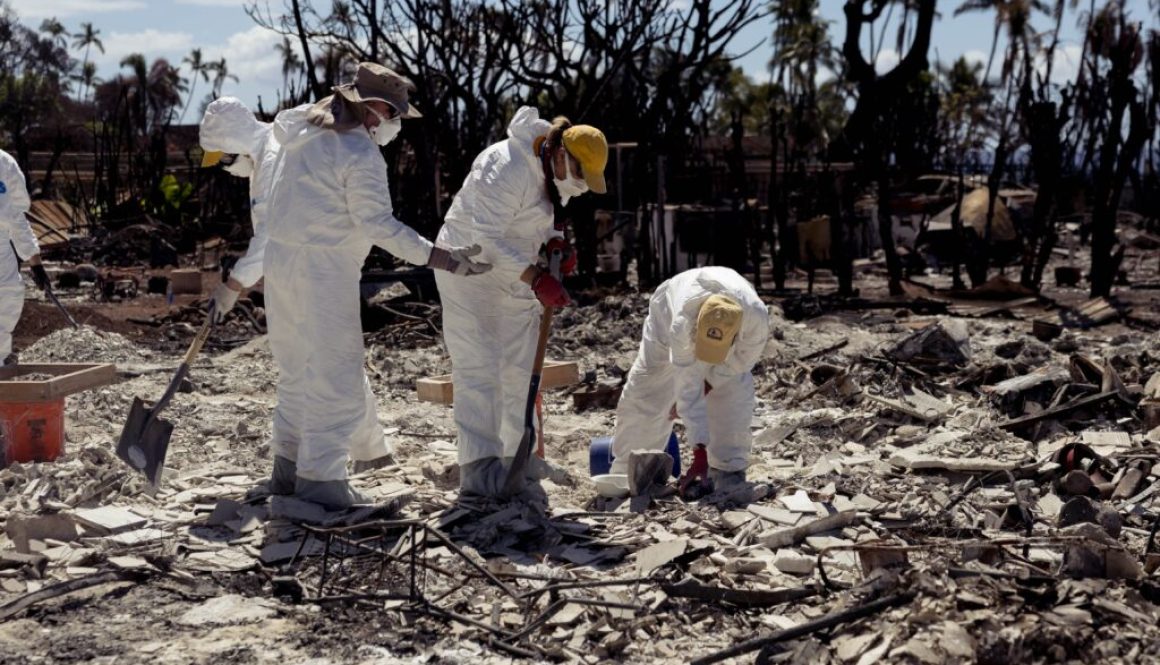
Following historic fires that devastated Lahaina, Hawaii, Southern Baptist Disaster Relief volunteers from across the United States traveled to Maui to help homeowners sort through the ash in the hopes of finding valuables that might have survived the flames. File photo from the Hawaii Pacific Baptist Convention
In the immediate aftermath of the fires, Southern Baptist Disaster Relief volunteers mobilized under the leadership of Hawaii Pacific Baptist Disaster Relief co-directors John and Gay Williams. Send Relief, the Southern Baptist Convention’s compassion ministry arm, played a vital early role by providing personal protection equipment and supplies for the dangerous ash-out work and by raising awareness about Maui’s ongoing recovery needs among the broader Southern Baptist family.
The initial response of Hawaii Pacific Baptist Disaster Relief was emotional and spiritual care by trained chaplains, followed by coordination of housing for first responders and management of volunteers at a Kihei facility. What followed was the critical “ash-out” process that began in September 2023, where volunteers carefully searched through the ashes, helping homeowners find their belongings in what was left of their homes. By December 22, 2023, Hawaii Pacific Baptist Disaster Relief had welcomed more than 400 volunteers from 21 states who helped more than 500 families, providing immediate relief, hope and Gospel witness during the critical months following the disaster.
A gap that needed filling
As the initial disaster relief efforts concluded, John and Gay Williams recognized a significant gap that needed filling. They possessed a comprehensive list of more than 650 fire survivors whom volunteer teams had personally served. Unlike typical disaster relief situations, where much smaller lists are passed to local pastors for follow-up ministry, this volume presented a challenge that would be overwhelming for any single church to handle effectively.
“We finished with over 650 names, and we didn’t want to give up the relationships that had been built through daily contact with families sifting through the ashes of what was left of their homes,” Gay Williams explained.
The solution demonstrates God’s hand of providence. Pete and Donna Beal, members of Kahului Baptist Church who had returned to Maui eight years ago in retirement after mainland ministry and business endeavors, sensed God’s direction to lead the ministry that would follow up with each of these precious souls.
Beyond the honeymoon phase
Pete and Donna positioned their Maui Fire Caring Ministry during what disaster experts call the “disillusionment phase” of recovery –the critical period when initial community support wanes and survivors face mounting anxiety about ending assistance programs. Many families were receiving concerning notices or heard rumors about FEMA housing termination, creating an opportunity for both practical assistance and spiritual ministry.
Working with 15 trained volunteers from Southern Baptist churches across Maui, the Beals developed a comprehensive approach that combined systematic phone contact with personal visits for families who expressed a need. Knowing that every fire survivor had a story about August 8, 2023, their leading question was, “Where were you when the fire happened?”
“One woman told us with tears that this was the first time anyone had asked her about that day,” Donna Beal shared. “She said it was cathartic because all her friends were also fire survivors, so they never talked about what happened.”
Gospel-centered impact
While the ministry provided practical financial assistance to families in need, Pete and Donna, along with the volunteers, never lost sight of their primary purpose: sharing the Gospel. At every personal meeting, they explained why the Bible they offered wasn’t just another book, but God’s living Word with the power to transform lives.
“Even when English wasn’t their first language, I could see God grabbing their hearts when Pete spoke,” Donna said. “We’d tell them, ‘If the Lord grabs your heart to come to church, these are the churches you can come to.’”
The ministry distributed approximately 200 Bibles in English, Spanish and Tagalog, offering prayer to every family, with very few declining.
Faithful service, lasting connections
Over 14 months, the Maui Fire Caring Ministry achieved something extraordinary: they contacted every single fire survivor on the original list from John and Gay Williams, plus additional survivors who came to their attention – 748 people in total.
Among the most encouraging outcomes are the ongoing church connections established. One family attended last year’s Maui County Baptist Association annual meeting to personally thank donors and was given the opportunity to share beautiful stories of hope. A single mother with a hearing-impaired autistic daughter began attending Kahului Baptist Church after connecting with the ministry.
Building on strong foundations
Gay Williams, with disaster relief experience across multiple states, notes: “I don’t know that anywhere else they followed up to contact every person that disaster relief ministered to. This may be the first time this type of systematic follow-up has been attempted.”
Every disaster response is unique, and Southern Baptist Disaster Relief teams consistently demonstrate excellence in providing practical assistance and Gospel-centered care. The Maui experience highlights how systematic long-term follow-up, when combined with multi-church partnerships, trauma-informed volunteer training and careful stewardship can extend ministry impact well beyond the initial response phase.
Standing firm, contending together
On July 31 of this year, the Maui Fire Caring Ministry formally concluded after 14 months of faithful service. The ministry’s impact continues through the ongoing church connections established, the Gospel conversations that took place in homes across Maui, and the practical assistance that demonstrated Christ’s love during families’ darkest hours.
This ministry represents what can be accomplished when God’s people are “standing firm in one spirit, in one accord, contending together for the faith of the gospel” (Philippians 1:27, CSB). Hawaii Pacific Baptist Disaster Relief, Send Relief, the Hawaii Pacific Baptist Convention and the Maui County Baptist Association partnered seamlessly to serve fire survivors. The financial support came from across the Southern Baptist Convention – individuals, churches and state conventions who gave generously. We are deeply grateful for every prayer offered, every dollar donated and every volunteer who served.
The long road ahead for Maui
As we mark this second anniversary, the physical rebuilding of Lahaina continues to face significant challenges. According to initial damage assessments by the University of Hawaii’s Pacific Disaster Center, the Lahaina fire destroyed or damaged 2,207 structures across 2,170 acres, with reconstruction costs estimated at $5.5 billion. Despite infrastructure restoration and over $3 billion in federal commitments, fewer than 50 homes have been rebuilt from the nearly 2,000 residential structures destroyed.
Recent University of Hawaii survey data confirms that approximately 90 percent of fire survivors remain displaced from their homes, with housing costs 50-60 percent higher than pre-fire levels. While the recent allocation of $1.6 billion in federal housing assistance provides new hope, the massive scale of destruction and lengthy permitting processes suggest that complete recovery will extend 5-10 years. These ongoing challenges underscore why sustained spiritual ministry and church connections remain so vital for families navigating this prolonged journey of rebuilding their lives.
On behalf of all those blessed by these ministries, thank you for your prayers and financial support, and please continue praying as Maui’s long road to recovery continues.
By Dr. Ed Jordan, pastor, Gwynn’s Island Baptist Church, reprinted with permission from November 21 issue of Lifelines.
Gwynn, VA – It is the season for giving thanks to God. But then, every season, and every day is the season to give thanks to God. Psalm 136:1 (CSB) exhorts us to: “Give thanks to the LORD, for He is good. His faithful love endures forever!” When was the last time you gave thanks to God, heartfelt, and from a heart overflowing with gratefulness?
We live in a secular sinkhole, sinking deeper and deeper into depravity and ingratitude. It is a “dog eat dog” world. But the state of our world is not God’s fault. God has not changed. We have changed. We have become obsessed with lies and bitterness, rage and hatred. Those are byproducts of mankind when it rejects God. You can’t turn on the news without listening to hateful bitter people. Their blind hate is eating them like a cancer, and they think that their life is grand as they decay before our very eyes.
Whenever I see evil spewing out of them, it causes me to pray that God would break through their hatred, to deliver them. But people must want to change. And unfortunately, they have hated others for so long that hatred is what they think is normal.
Ironically, seeing the worst in humanity makes me grateful. I am grateful that God pulled me out of that lifestyle many decades ago. I am grateful that my relationships with others are loving ones, instead of bitter and destructive ones. Without God, I would be stuck in bitterness. But I am not a better person than anybody else; I am just a person who called out for God to transform me and deliver me. God in His mercy, and through His generous grace, rescued me from myself, and gave me the power to live a new life, with values that empower me to want to build people up, instead of tearing others down.
The Psalmist teaches us to give thanks to the Lord, because He is good. When we come to the reality that God is good, and loves us, we are first humbled. How could sinless, perfect, all-powerful and totally sinless God love me? How could God ever want to have me in His home for eternity? Because God is good. His nature is good. He has no evil intent or malice. All God ever wanted for each of us, was for us to come to Him and experience His love and goodness towards us.
Our human concept of love is that love must be earned, that love should only be extended to nice people, people who are flawless … as compared with us, that is. Yet there are no such people. All of us have sinned, the best any of us can put together in a concept of goodness is a pile of oily rags compared to God’s perfection and majesty. And yet God loves each of us so much, that He sent Jesus, His only begotten Son (John 3:16), so that anyone who believes in Him, i.e., commits their life to Him, will not perish but instead have everlasting life. Jesus lived among us so that we could see the goodness of God in living flesh. He came to us while we were in darkness, while our minds and lives were filled with darkness. While we were raging hatred toward Him, He showed goodness and love toward us. That is why we should gladly, and gratefully, give thanks to the Lord. He poured out His love upon us, and was good to us while we were still being mean to Him.
Give thanks to the Lord, for He is good. “Is” is the present tense of the verb “to be.” Jesus is always good to us. God is always good towards us. Furthermore, this verse goes on to say that we should give thanks to God, for His faithful love endures forever. God’s love is not fickle. It is not a “I love you today but won’t tomorrow” kind of love. Once we commit ourselves to Him, He is faithful to us. He is faithful to us, even when we are not faithful to Him.
So, there are three things to give thanks for in this one little verse: Give thanks to God that He is God and nothing can thwart Him. Give thanks that God is good, and always has our best interests at heart. Give thanks that God is faithful to us, even when we are not faithful to Him.
Give thanks and express your gratitude to God.
Award-winning columnist Dr. Ed Jordan is pastor of Gwynn’s Island Baptist Church, Gwynn, VA. He used to serve in Pocatello, Idaho. He can be reached at szent.edward@gmail.com
By Karen Willoughby (republished from 9/5 issue of Baptist Press, by permission)
Pastor Mike Palmer takes off his cowboy hat when he preaches at Salmon Valley (Idaho) Baptist Church, but keeps it on when he preaches at Lemhi River Cowboy Church, 30 miles east of town. Photo by Karen Willoughby
SALMON, Idaho (BP) – This county seat town is so rural people drive three hours one way over two-lane roads – to Missoula, Montana, or Idaho Falls, Idaho – to shop at Walmart or other big box stores.
But what Salmon lacks in shopping it makes up for with its “can do” sense of community. People here care about each other, watch out for each other and help each other, frequently by digging out from the town’s average of 42 inches of snow each year.
Mike Palmer, fresh from New Orleans Baptist Theological Seminary, arrived 27 years ago to Salmon Valley Baptist Church for his first pastorate.
“We have good people who love the Lord and who serve Him willingly,” Palmer told Baptist Press. “Whatever’s needed, they’re quick to pitch in.”
Palmer sets the example: In 2010 he started and now also pastors Lemhi River Cowboy Church in Tendoy, Idaho, 20 miles east of Salmon. About 30 people gather Sunday nights for worship in a newly constructed building on a field given to the church.
Palmer has been church planting director for the Utah-Idaho Southern Baptist Convention for 10 years, which has grown into the title of Church Planting Leader for the North American Mission Board’s (NAMB) Send Network Utah Idaho.
Students attending Preacher School discuss what they are learning together
Fourteen years ago Palmer started and still leads Western Preacher School, a two-day short course in sermon and Bible study preparation, which has grown to include Utah and Wyoming.
“Living where I live, on Sunday morning you’re not going to find a supply preacher on short notice,” Palmer said. “We need to train people. We need to train and raise up people to preach, lead Sunday school and other ministries.
“In the New Testament, the pastors of churches came up from within the church,” he added. “They didn’t have the idea of calling someone from someplace else. It’s a biblical concept: Teach men and women to be able to share the Gospel. Teach them how.”
Members of the congregation minister locally at the food bank, pregnancy care center, nursing care facility, through hospital chaplaincy and more.
Associate Pastor Tyler Baker and Palmer host a weekly podcast – “Into the Western Wild” – and discuss the circumstances of the world to help listeners understand and respond through the lens of Scripture.
In addition to being Salmon Valley’s Family Pastor, Frank Unrein 15 years ago planted and continues to lead the Challis Community Bible Study, about 60 miles southeast of Salmon. He’s also a chaplain at Castleview Hospital in Salmon.
Nathan and Amber Harden are Salmon Valley’s fulltime missionaries. They travel the Rocky Mountain states as NAMB Mission Service Corps (self-supported) carpenter missionaries, helping churches with construction projects at no cost. It was Harden who led in building the Lemhi River Cowboy Church.
As the congregation has grown from Palmer’s arrival in 1997 – it numbered 63 then – to 180 or more, Palmer has taught them to lead however they feel comfortable. For example, one woman doesn’t want to be in front of the church’s women’s ministries group.
“I like to do this,” she said, waving her hands over stacks of items for an upcoming women’s retreat that was, for the first time, to include women from churches up and down eastern Idaho. “This behind-the-scenes I could do all day long.”
Women – and one man – from the church prepared the Friday supper and Saturday lunch during last spring’s Western Preacher School that took place the first weekend in May at the church. Purchasing, preparing, setting out and cleaning up all took different skill levels and helped newer members connect with those who’d been around awhile.
Last year 20 people were baptized at Salmon Valley Baptist. In recent years the church had a baptism rate in the upper single digits, but God began to do a fresh work in the church and community in 2023 resulting in the increased baptisms.
Central to Salmon Valley’s purpose as a church is to participate with other Southern Baptists in helping to fulfill the Great Commission. This is done through the investment of 10 percent of the congregation’s offerings to missions through Southern Baptist causes: the Cooperative Program, (7 percent) Utah-Idaho Southern Baptist Convention (2 percent) and the Eastern Idaho Baptist Association (1 percent.)
Church members in 2023 also gave $12,464 directly to international missions through the Lottie Moon Christmas Offering, and $3,858 to North American missions through the Annie Armstrong Easter Offering.
“For me personally, I think as a church the Cooperative Program is important because we’re joining other Southern Baptists in doing ministry around the Mountain West and across the world,” Palmer said. “God promises if we give, He’s going to give and I don’t mean financially but when we give to God, that’s obedience and He blesses that.
“We’ve been extremely blessed by the partnership of our fellow Southern Baptist churches in Idaho as we reach out together to do ministry around the region and plant churches,” the pastor continued. “They’ve joined us in that ministry and we’re grateful they were able and willing to do that.”
When Palmer moved to Salmon, he had no idea how to “do church” other than what he had learned at New Orleans Baptist Theological Seminary, the pastor said, “walking with people in the joys and tragedies of life. I’ve learned from God, from doing, and from the people I’ve been walking with.
“This is my first pastorate so everything I’ve learned, I’ve learned here,” Palmer said. “Always point people to Jesus. I don’t have anything that’s going to make a difference in their life, but Jesus does.
“Don’t quit. Nobody sets out to quit, but many people do. God is faithful if we will remain true to His call.
“Pastor your family first. If you don’t take care of your family, you’ll lose your family and your ministry.”
When asked his vision for the future at Salmon Valley Baptist, Palmer said, “We’re going to continue to love our community when it’s hurting and when it’s not, and plant churches.”







 Gwynn, VA – It is the season for giving thanks to God. But then, every season, and every day is the season to give thanks to God. Psalm 136:1 (CSB) exhorts us to: “Give thanks to the LORD, for He is good. His faithful love endures forever!” When was the last time you gave thanks to God, heartfelt, and from a heart overflowing with gratefulness?
 Award-winning columnist Dr. Ed Jordan is pastor of Gwynn’s Island Baptist Church, Gwynn, VA. He used to serve in Pocatello, Idaho. He can be reached at


 Nathan and Amber Harden are Salmon Valley’s fulltime missionaries. They travel the Rocky Mountain states as NAMB Mission Service Corps (self-supported) carpenter missionaries, helping churches with construction projects at no cost. It was Harden who led in building the Lemhi River Cowboy Church.